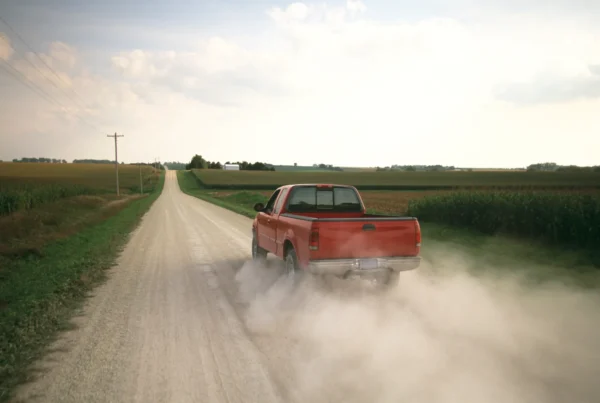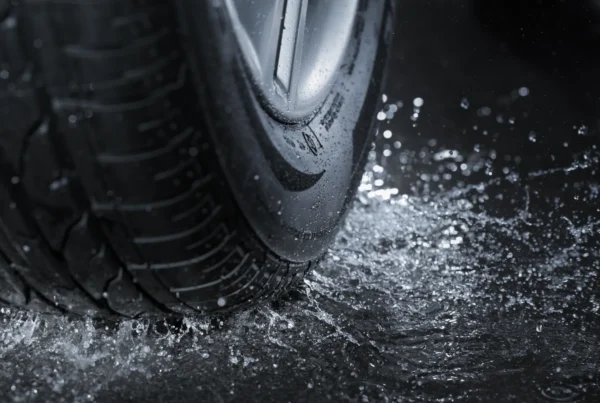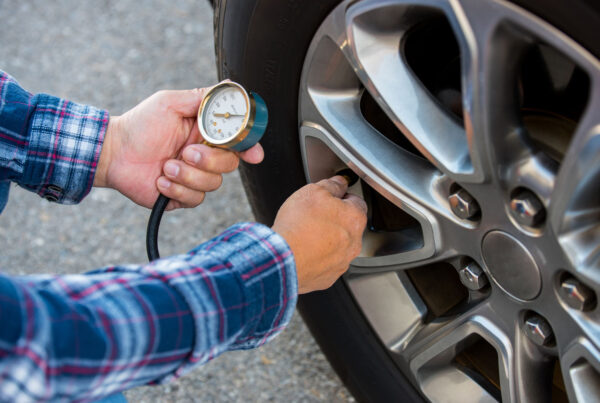
Walk through the parking lot at any feed store, boat ramp, or job site in Marengo County and you’ll see three very different sets of tires on trucks that all do roughly the same work. One truck is on a smooth, closed tread that looks almost like a car tire. The next has chunkier shoulder blocks. The third is on deep, widely spaced lugs you can hear coming before you see it.
None of those owners is wrong. They’re just sitting at different points on the same spectrum of compromise. Highway, all-terrain, and mud-terrain tread patterns aren’t a good, better, best ladder where more aggressive always means more capable. Each family buys you something and charges you for it somewhere else, so the smart way to pick is to look at your own week rather than at the tire.
Here’s how the three families differ, how to tell which one is already bolted to your truck, and why the most aggressive tread on the rack is usually the wrong answer for somebody who spends most of the week on Demopolis pavement.
Start With Your Week, Not the Tire
Before you look at a single tread pattern, do a rough count of where your miles go.
Think back over the last full week you drove and split the mileage into two buckets:
- Pavement: the four-lane run on US 80, trips into Demopolis for groceries and appointments, the drive down to Linden or Thomasville, a run over toward Uniontown, Greensboro, or Eutaw, school pickup, the highway leg of a longer haul.
- Dirt: field roads, gravel county roads, log decks, pipeline cuts, the clay two-track behind the camp gate, a job site that turns to soup after a rain.
You don’t need exact numbers. You just need to know which bucket holds the clear majority, and for most trucks around Demopolis and the surrounding Black Belt the answer catches the owner off guard: the pavement bucket wins by a wide margin, often eight or nine miles out of every ten.
That ratio is the single most useful thing you can bring to a tire conversation, because tread pattern is the one tire decision that trades directly against it. US 80 crosses the state from the Mississippi line near Cuba through Demopolis, where it runs together with US 43, and the stretch between Cuba and Demopolis has been four lanes since 1987. Those are fast, smooth, hot summer miles, and they’re where your tread spends most of its life whether or not you picked it for that.
Highway Tread: Quiet, Long-Wearing, and Pavement-First
Highway tires, usually badged H/T, are built around a closed tread pattern. The blocks sit tightly together with fairly narrow grooves between them, so more rubber is touching the road at any moment and there are fewer big gaps to slap against the pavement and make noise.
What that pattern buys you:
- The quietest ride of the three families at highway speed.
- The most even, slowest wear on hot pavement, because tightly supported blocks flex and squirm less.
- Generally the best manners in rain, since the contact patch is more continuous and the tread is laid out around water channels rather than mud clearing.
What it gives up:
- Bite in mud and slick Black Belt clay, where a fine tread pattern packs full and turns into a slick.
- Traction on loose gravel and sand, where a tire needs to dig rather than float.
- The tougher construction and open shoulders that help in cut-over timber, where sharp stobs and rock are a real threat.
If you commute on US 80 five days a week and the roughest surface you see is the gravel at a boat ramp or your own driveway, a highway tread is the honest answer. Putting something aggressive on that truck doesn’t make it safer. It just makes it louder and has you shopping for truck tires in Demopolis again sooner than you needed to.
All-Terrain Tires in Demopolis, AL: The Middle Ground Most Local Trucks Want
All-terrain tires, badged A/T, open the tread pattern up. The blocks get bigger, the grooves get wider, and the shoulder gets more pronounced so the edge of the tire can grab a rut wall or the side of a gravel road. Many carry a tougher casing than a highway tire, and most carry the M+S marking on the sidewall.
This is the family that fits the widest slice of Marengo County trucks:
- The farm truck that runs paved miles into town in the morning and field roads all afternoon.
- The timber contractor who is on a log deck at nine and back on the four-lane at four.
- The hunting club member who drives good highway to the camp gate, then a rutted clay two-track that stays greasy for two days after a rain.
The trade is real but modest. Compared with a highway tread, an all-terrain usually:
- Runs a bit louder, more of a hum that rises and falls with speed.
- Wears somewhat faster on pavement, since bigger blocks with more open space around them have more room to flex and scrub.
- Gives up a little wet-pavement composure in exchange for genuine grip when the surface is loose.
For a driver whose week is honestly split, that’s a good trade, and it’s why all terrain tires in Demopolis, AL are the most common set we fit on farm and work trucks. The mistake is buying an all-terrain because it looks right on a lifted truck that never leaves asphalt. The pattern is still paying a pavement penalty whether or not you ever collect the off-road benefit.
Mud-Terrain: Grip for Black Belt Clay, Trade-Offs on US 80
Mud-terrain tires, badged M/T, take the idea to its end. The lugs are deep and widely spaced, with big voids between them so mud and clay get flung out instead of packing in. That self-cleaning action is exactly what you want when the surface has no bottom to it, and no all-terrain will match it.
What you pay:
- Noise. Those wide voids strike the pavement in sequence, and at four-lane speed on US 80 that becomes a drone you can’t tune out.
- Wet pavement grip. Less rubber is in contact with the road, and the big unsupported blocks squirm under braking and cornering loads, so stopping and turning on wet asphalt asks more of the tire than a closed tread does.
- Tread life on pavement. The same block flex that helps the tire conform to rock scrubs rubber away on hot asphalt.
There’s also a wrinkle worth knowing before you sit down and compare specifications. Federal Uniform Tire Quality Grading rules don’t apply to deep tread tires, winter-type snow tires, temporary spares, or tires with rim diameters of 12 inches or less. Because many mud-terrains fall under that deep tread exemption, they often carry no UTQG treadwear or traction grade at all. You may find you simply can’t line up an M/T’s wear grade next to a highway tire’s and compare them, because one of the two numbers doesn’t exist.
A mud-terrain earns its keep on a truck that lives where the mud is: a crew truck that spends most of its life on a wet job site, or a rig that mostly runs off pavement and sees only short paved hops in between. If that’s your truck, the trade-offs are worth paying. If it isn’t, you’re buying capability you use a few weekends a year and paying for it every single day.
How to Read the Tread Family Off the Tires You Already Have
You don’t have to guess what is on the truck now. Everything you need is printed on the sidewall. Walk out and look for four things.
The model name and its letters
Tire makers put the model name in raised letters on the sidewall, and the tread family is usually right there in it. Look for A/T or the words “all terrain” for an all-terrain, M/T or “mud terrain” for a mud-terrain. Highway tires are labeled less consistently, but a model name with no terrain wording and a tightly closed tread pattern is almost always a highway tire. Plenty of drivers find an A/T badge on tires they never picked, which explains a hum they had been blaming on something else.
The M+S stamp
M+S stands for mud and snow, and it shows up on most all-terrains and mud-terrains. What it isn’t matters just as much. According to Modern Tire Dealer, M+S is a generic indicator with no specific performance test a tire has to pass. It describes the shape of the tread, not a measured result. Useful as a category clue, not as a promise.
The three-peak mountain snowflake
The little pictograph of a snowflake inside three mountain peaks is a different animal, because a tire has to earn it. Modern Tire Dealer reports that a tire must reach a traction performance index of 110 or higher under the ASTM F1805-20 test method to carry the symbol. That’s a real certification with a real threshold behind it.
Read the fine print on what it measures, though. That test covers acceleration traction on medium-packed snow only. It leaves out braking and turning on snow-covered surfaces as well as ice traction, and it doesn’t necessarily represent a tire’s peak winter performance. For a truck that lives in Demopolis, where snowfall is negligible, the snowflake is a nice thing to have and a poor thing to choose on.
The UTQG traction grade
This is the marking that deserves more of your attention than the snowflake does, because it’s about rain. The UTQG traction grade is a wet, straight-ahead braking measurement taken on government test surfaces. A grade of AA means the tire exceeded an adjusted traction coefficient of 0.54 on asphalt and 0.38 on concrete. A means it exceeded 0.47 on asphalt and 0.35 on concrete, B means it exceeded 0.38 and 0.26, and C sits at or below those B figures. The grades don’t account for acceleration, cornering, or hydroplaning, so they aren’t the whole story, but they are a measured wet-braking comparison you can read straight off a tire.
The treadwear number on the same line works the same comparative way: a tire graded 150 would wear one and a half times as long as a tire graded 100 on the government test course.
Why Overkill Wears Out Sooner in West Central Alabama
Demopolis averages 54.52 inches of precipitation a year in a humid subtropical climate with negligible snow. Put those two facts together and the local priority list writes itself. Wet pavement braking is a weekly concern here. Packed snow acceleration is not.
That’s the case against buying more tread than your week justifies. An aggressive pattern is built for a surface you rarely touch, and it pays for that on the surface you touch constantly. Big, open, deeply cut blocks flex under load on hot asphalt, and that flexing scrubs rubber off faster and often less evenly than a supported highway block does. The capability is genuine, and so is the bill for it. It just comes due in noise and mileage rather than all at once.
Two habits decide whether you actually use up the tread you paid for:
- Keep the alignment right. A truck that pulls or dog-tracks is grinding one edge of the tread away while the rest is still good. If yours drifts, our post on why your truck veers to the left or right walks through the usual causes.
- Rotate on schedule and check depth. Alabama law prohibits operating a vehicle when a tire has tread depth less than 2/32 inch, measured in any two adjacent tread grooves at three equally spaced intervals around the tire. That’s the legal floor, not a target, and wet grip falls off well before you reach it. Our tire safety checklist for drivers covers the quick monthly walk-around.
Neither habit changes which family is right for you. Both change how long that family lasts.
Bring the Truck by Lane’s Tires in Demopolis
The short version: count your pavement miles honestly, match the tread family to where the majority of them go, and treat anything more aggressive as a purchase you should be able to justify out loud.
If you aren’t sure where your truck lands, come by the shop in Demopolis. Tell us how your week splits between the four-lane and the field road, let us read the sidewalls on what you’re running now, and we’ll lay out the realistic options. You can also shop for tires online first if you’d rather start there. If you have been searching for a tire shop Demopolis, AL drivers actually trust, we’ve been right here since 1992, and we would rather send you home on the right tread than the most aggressive one. Request a quote and we will give you current pricing on the tires that fit how you really drive.