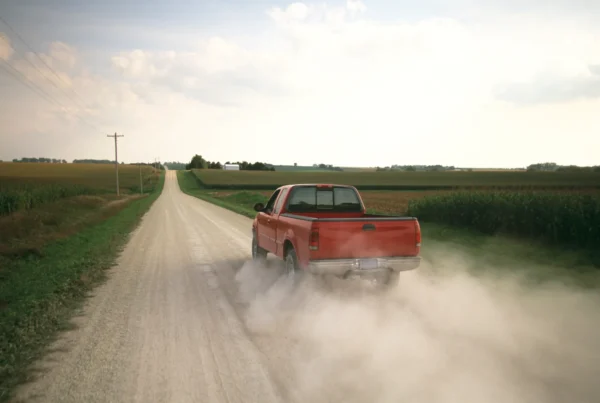

You know exactly what your truck did. It shuddered at the light on Highway 80 West, or the idle went rough for a block, or the check engine light blinked on Tuesday and was gone by Friday. Then you bring it in and the thing runs like it just rolled off the lot. The tech drives it. Nothing. Hooks up a scan tool. Nothing obvious. And now you feel like the person who complained about a noise that does not exist.
Nothing is wrong with you, and nothing is wrong with the tech. This is the most common frustration in engine diagnostics, and we hear it from Demopolis drivers most weeks. Intermittent faults only happen when a specific set of conditions line up, and a shop bay is the most stable place a vehicle ever sits: level floor, moderate temperature, no load, no wind, no potholes, engine idling. The conditions that broke it are usually not in the room.
The good news is that the vehicle has been keeping notes. Every car and light truck sold here since 1996 has a standardized 16-pin diagnostic connector under the dash, and the computer behind it records more than most drivers realize. Here is what survives after the symptom quits, and what you can write down to cut the hunt short.
Why the Fault Goes Quiet on the Way to the Shop: Intermittent Car Problem Diagnosis in Plain English
Intermittent car problem diagnosis is a problem of conditions, not parts. A cracked connector pin makes contact when it is warm and loses it when it is cold. A failing sensor reads fine at idle and drifts under load. A weak fuel pump keeps up until you ask for full throttle up a grade with a hot engine.
West-central Alabama gives those conditions a wide swing to work with, on a daily Highway 80 commute or on county roads around Marengo County. Demopolis sits in a humid subtropical climate where July averages a high around 91 degrees and January averages a low right at freezing, with roughly 54 inches of rain a year. That is a big spread of temperature and humidity for an electrical connection or a rubber vacuum line to live through. A fault that needs a cold, damp morning will not show itself at 2 in the afternoon in August, and the reverse is just as true.
So the first honest thing a shop in Demopolis can tell you is this: if the fault is not present, it cannot be measured directly. What can be done is read what the computer preserved, then put the vehicle back into the state it was in when it misbehaved.
Engine Diagnostics in Demopolis, AL: What the Computer Kept After the Symptom Stopped
A scan tool reads several separate records, and each one holds something different.
- Pending codes. When the system first detects a fault, it stores a pending code, in most cases within about ten seconds, with no warning light yet. A technician reads these through a dedicated request that returns faults detected during the current or the previous driving cycle. For a one-time stumble it is often the only trace.
- Confirmed codes. If the same fault shows up again on the next driving cycle, the system turns the warning light on and stores a confirmed code. That is the code most people mean when they say “it threw a code.”
- Permanent codes. When a fault has commanded the warning light on, the vehicle also writes a permanent code into memory that does not clear when someone erases codes with a scan tool. It clears when the vehicle proves to itself that the problem is gone.
- Freeze frame. A snapshot of engine operating conditions captured at the moment the code was stored. More on this next, because it is the heart of the job.
- Readiness monitor status. The vehicle runs its own self-tests in the background, and each reports ready or not ready. Which ones have completed tells the tech how much of the system has been exercised since anything was last cleared.
That answers the question we get most often about check engine light diagnosis in Marengo County: no, the light going out on its own does not mean the fault went away. On 2019 and newer vehicles, the rules let the light be turned off after three consecutive driving cycles in which the responsible self-test runs and finds the fault gone, provided no other light-triggering fault has appeared. The light is a courtesy notification. The records behind it are the evidence, and they are still there with a dark dashboard.
Reading a Freeze Frame: A Snapshot, Not a Video
The freeze frame is the closest thing to a witness statement your engine can give. It captures the operating conditions at the instant an emissions-related trouble code was stored, and the list of what it holds is worth knowing:
- Engine speed and vehicle speed
- Engine coolant temperature
- Throttle position and calculated engine load
- Intake manifold absolute pressure
- Fuel system status, open loop or closed loop
- Short-term and long-term fuel trim
- Oxygen sensor readings
A tech reads those numbers against what normal looks like. Fuel system status should read closed loop, meaning the engine was adjusting the mixture off its sensor feedback; open loop means it was not responding to that feedback at all, so the fuel trim numbers in the same snapshot cannot be trusted. Coolant temperature should have reached at least 190 degrees, and a lower number suggests the computer read the engine as still cold and was adding extra fuel. Fuel trim values typically live between about negative 10 and positive 10 percent, so anything well outside that band is a lead. Calculated load reads as a percentage of peak torque and hits 100 percent at wide-open throttle.
Now the part that most articles about codes leave out, and the reason a freeze frame gets read carefully rather than taken at face value: the snapshot is captured when the code sets, not when the trouble began. Those are not always the same moment. Misfire detection, for example, may not complete until 60 to 90 seconds after the problem started, and by then the engine can be in a completely different operating state.
Picture a misfire you felt at a red light on Highway 80. The freeze frame may show 45 miles per hour, because that is where the truck was when the counter finally tripped. Read literally, it sends a tech looking for a highway-speed problem. Read with the delay in mind, it points back to idle. This is where a driver’s own account stops being a nicety and becomes data.
Why Most Faults Have to Happen Twice
The two-cycle logic behind the warning light explains a lot of otherwise baffling behavior. First detection stores a pending code and says nothing. A repeat on the next driving cycle lights the dash and stores a confirmed code. If it does not repeat, the pending code is erased at the end of that driving cycle.
Two practical consequences:
- A one-time event may leave a pending code and no light. If you felt a hesitation this morning, getting the vehicle scanned soon is worth doing, because that pending code is not guaranteed to still be there in a week.
- A light that came and went still leaves a trail. Confirmed and permanent code records plus monitor status outlive the light itself.
There is a local wrinkle. The Alabama Department of Revenue puts it plainly: Alabama law does not provide for emissions testing of motor vehicles. No annual inspection here plugs into your car and hands you a report, so nothing in the normal course of owning a vehicle in Marengo County reads these records for you. The only trigger is a driver noticing something and asking someone to check it, which is why the note in your phone matters more here than it would in a state with an inspection program.
The Monitored Test Drive on Highway 80
When the records point at a set of conditions, the next step is to recreate them with the scan tool recording. That is what a monitored test drive is: the vehicle on the road under real load, at real temperature and real speed, with live data logged so the exact moment of the fault can be replayed afterward.
US Highway 80 is useful for this because it offers sustained road speed and steady load in a way a parking lot cannot, and it runs right past our door on Highway 80 West. It is the same stretch that makes a speed-dependent vibration easy to pin down, which we covered in Shake at 60 on Highway 80. If the freeze frame describes a warmed-up engine at highway speed under moderate load, that is where the vehicle needs to be. If it describes a cold engine at low speed, the test may have to wait for first thing the next morning, which is why a shop occasionally asks to keep a vehicle overnight.
Two things follow. Reproducing an intermittent is real diagnostic work, not “just driving it around,” and it belongs with the rest of our auto repair and tune-up services. How long it takes depends on how cooperative the fault is. Some announce themselves in the first mile. Some take several attempts across different conditions.
What to Write Down Before You Bring It In
Here is where you can do the most good, and it costs you nothing. The computer records what it measures: engine speed, road speed, coolant temperature, throttle position, load, manifold pressure, fuel trim, sensor readings. It does not know the A/C was on full blast on a July afternoon, or that you were nearly out of fuel, towing, or just off the highway. Those details are half the picture, and you are the only source for them.
The Intermittent Fault Note. Next time it acts up, pull over when it is safe and jot down:
- Outside temperature, roughly, and whether it was raining or humid
- How long the engine had been running, and whether it was a cold start
- Road speed, and whether you were accelerating, cruising, or stopped
- Uphill, downhill, or level
- Whether the A/C or heater was running, and on what setting
- Other electrical loads: headlights, wipers, defroster
- Roughly how much fuel was in the tank
- Whether you were loaded, towing, or empty
- Road surface: smooth pavement, rough patch, or dirt
- What the symptom actually felt like, and how long it lasted
- Whether any warning light came on, and whether it stayed on
A short note like that turns an open-ended hunt into a targeted test. Paired with the freeze frame, it often tells a tech within minutes which system to load up and where to drive it.
Do Not Clear the Codes Before You Come In
Clearing the codes with a borrowed scan tool erases the freeze frame and resets every readiness monitor to not ready. The evidence is gone, and the vehicle has to re-run all of its self-tests before it can tell anyone whether the fault is still there. If you have already read the codes yourself, write the numbers down and leave everything in place. It is the most expensive shortcut in engine diagnostics, and we see it often.
Why Diagnostic Time Is Quoted Per Vehicle
Fair question, and here is the straight answer. A brake job is a known quantity: known parts, known labor, same procedure every time. Chasing an intermittent is not. The work depends on which records survived, how many conditions have to be recreated, and whether the fault cooperates on the first test drive or the fourth. A number posted on a page could not be honest about that, and parts and labor move too fast for anything printed here to stay accurate.
What we can do is look at your vehicle, your symptom, and what its computer stored, then tell you what the diagnostic work involves before anyone starts. If you have been searching for engine diagnostics near you in Demopolis, that is the conversation worth having. So instead of a number on a page, request a quote and we will give you a current one for your vehicle and your symptom.
If your car, truck, or SUV has a symptom that will not repeat on command, do not wait for it to get worse or assume nobody can find it. Bring your note to Lane’s Tire & Auto in Demopolis, leave the codes alone, and let us read what the vehicle has been recording. We look after drivers and work-truck fleets across Marengo County and west-central Alabama, and an intermittent nobody else could catch is one of the more satisfying parts of the job.