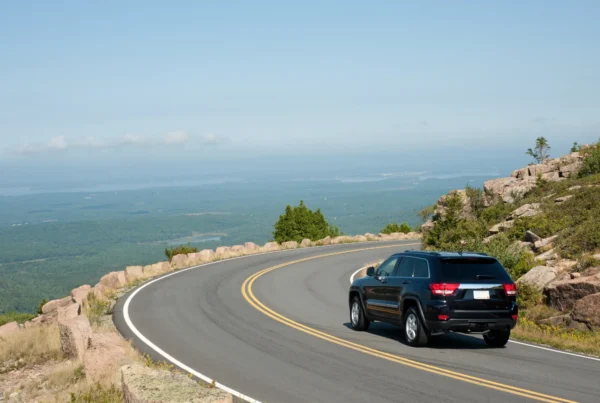
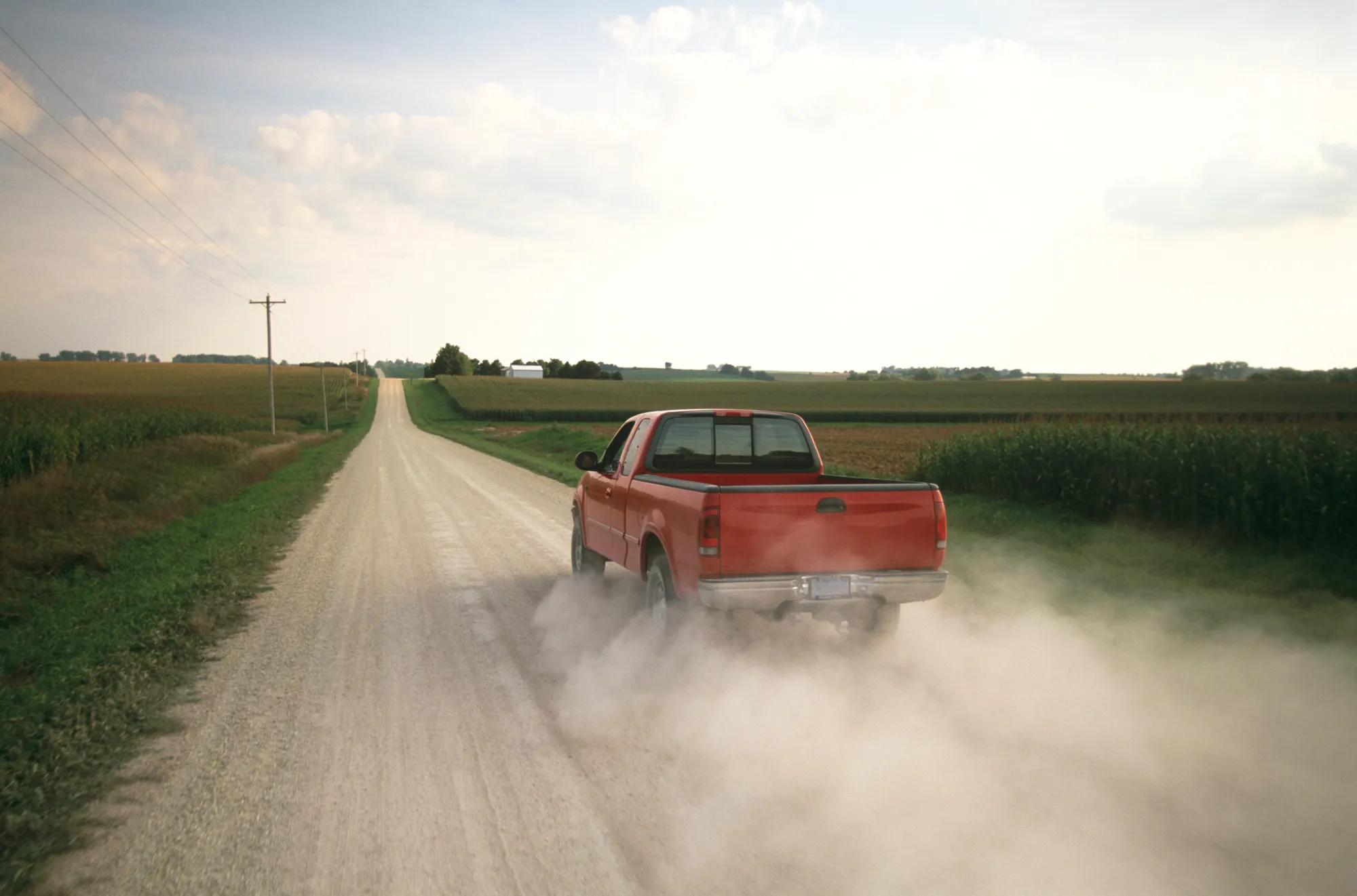
A flat on Highway 80 with a wide shoulder is an inconvenience. A flat on a Marengo County two-lane, out toward Jefferson or Sweet Water or on a county road off Highway 43, is a different problem. The pavement drops straight off into grass, there is no breakdown lane, traffic is still moving at highway speed, and your phone may be showing one bar.
Most drivers do not realize those first ten minutes decide more than whether everybody stays safe. They also decide whether the tire can be repaired at all, or whether it goes in the scrap pile no matter who looks at it. We have handled flat tire repair in Demopolis, AL since 1992, and we can usually tell from the first minute of a phone call which way a tire will go.
Before you start searching for roadside flat tire help near you, here is the order to work in.
Minute One: Get Off the Pavement, Not Just Onto the Line
Your first job is position, not the tire. Ease off the throttle instead of braking hard, keep both hands on the wheel, and let the vehicle slow itself. A tire that has gone down pulls toward that side, and a hard stab at the brake pedal is what turns a flat into a spin.
Then look for somewhere to put it: a field gate, a church lot, a wide farm drive, a gravel turnout. Anything that gets all four wheels clear of the traveled pavement beats parking with two wheels on the white line. Alabama law actually frames it this way: outside a business or residence district, a driver is not to stop or leave a vehicle standing on the roadway when it is practicable to leave it off the roadway, and a stopped vehicle should be visible from 200 feet in each direction. On a curve or over a rise, that visibility part is the whole ballgame. Stop just past a crest and the first car behind you sees you late.
The law also allows for the spot you may be in. It does not apply to a driver whose vehicle is disabled on the main traveled part of the highway in a way that makes stopping there impossible to avoid. If the tire is destroyed and the vehicle will not move safely, nobody expects you to make it worse.
Minute Two: Hazards On, and Get Everyone to the Field Side
Hazard lights go on before anything else, including before you open a door. On a narrow two-lane, the door you open matters. Get out on the shoulder side, away from traffic, even if it means climbing across the console. Take passengers with you, and keep children and pets well back from the pavement.
If the shoulder is so narrow that standing beside the car puts you within a couple of feet of passing traffic, stay belted inside with the hazards running and call from the seat. A vehicle is a poor place to be in a collision, but a fast rural roadside is worse.
Minutes Three and Four: Look at the Tire Before You Decide Anything
Now walk around the vehicle, staying on the field side, and actually look at it. Three questions to answer.
Is it low or is it flat? A tire that is soft but holding some air is a different situation from one sitting on the rim with the sidewall bulged out onto the ground. A slow leak may give you the option of airing up and driving in. A fully flat tire almost never does. A tire losing air quietly often announces itself first as a pull or a shake at highway speed, so a flat is not always your first warning.
Where is the damage? Look at the tread, the flat band that touches the road, then at the shoulder, the rounded corner where the tread turns into the sidewall. That difference is not cosmetic. According to the U.S. Tire Manufacturers Association, repairs are limited to the tread area, and a repair is not permitted where the injury extends into the shoulder or belt edge area, or where it angles into the shoulder. Michelin puts it more bluntly still: sidewall damage ruins a tire immediately. A small, neat cut in the shoulder is not a small problem, and no shop in Marengo County can honestly patch it.
Is something still in it? A roofing screw, a nail, a piece of baling wire. Out here it is usually a fastener off a work truck. Leave it alone and do not pull it out. It tells us the size and the angle of the injury, and once it is out that information is gone along with whatever air was left.
The Most Expensive Ten Feet You Will Ever Drive
Read this part twice. It is the one decision that scraps the most tires around here.
Say the steering has gone heavy and the nearest wide spot is a quarter mile ahead. Creeping that quarter mile on a completely flat tire feels careful. It is usually what ruins the tire.
With no air in it, the tire is no longer holding the vehicle up. The reinforcing cords inside fold under the weight of the vehicle, the sidewall gets chafed and abraded from within, and the innerliner (the airtight layer on the inside surface) is destroyed. None of that has to show on the outside. Michelin lists “the tire has not been driven on when flat” as a requirement for repair, and says even a short distance driven while completely flat can cause internal damage to the sidewall and carcass that will not show outside.
So a 1/4-inch nail hole in the center of the tread, which is textbook repairable, becomes a tire that has to be replaced. The nail did not do it. The quarter mile did.
Here is the rule we would give our own family: if the tire is fully flat, move only as far as safety genuinely demands and not a foot farther. Ten feet to clear a blind curve is worth it. A quarter mile to reach a nicer place to wait is not.
Run-flats are built for this exact moment and still have limits. Michelin says the speed and distance allowed after a pressure loss vary by tire model and manufacturer, so that number lives in your documentation. And once a run-flat has lost pressure it usually cannot be repaired, because the sidewall may be damaged internally even when the outside looks fine.
What Actually Makes a Tire Repairable
Since the point of the first ten minutes is protecting your ability to repair the tire, it helps to know where the line is. It sits narrower than most drivers assume.
- Tread area only. Shoulder and sidewall injuries are out.
- No larger than 1/4 inch. USTMA sets the limit at a puncture injury no greater than 1/4-inch, or 6mm, in diameter.
- The tire comes off the wheel. USTMA is explicit that tires must be removed from the rim and wheel assembly and inspected for all possible damage, including damage to the inner liner. You cannot see the inside of a mounted tire.
- Plug and patch together. A rubber stem, or plug, fills the injury and a patch seals the innerliner. USTMA states plainly that a plug alone is an unacceptable repair, and Michelin adds that plug repairs made while the tire stays on the wheel are improper and can result in an accident.
- Repairs cannot overlap. A tire that already has a proper repair in the same spot is done.
That is why we cannot give you a verdict over the phone, and why a roadside string plug gets a tire to the shop rather than fixes it. Any honest tire repair shop in Marengo County works to the same standard, since it belongs to the tire industry and not to us.
Minutes Five Through Seven: Do You Actually Have a Spare and a Jack
Now check your equipment instead of assuming. AAA has found that roughly 30 percent of new cars come without a spare, up from just 5 percent in 2006, and in one year went out to more than 450,000 members with a flat whose vehicle had no spare to put on.
So go look. Under the cargo floor on a crossover, under the bed or behind the seat on a pickup. Then make sure the rest is there: the jack, the lug wrench, and the key for a locking spare hoist. A spare you cannot get down is the same as no spare.
If what you find is a canister instead of a wheel, read the date on it. AAA notes that sealant and inflator kits can temporarily handle small punctures but do nothing for larger leaks or sidewall damage, and that they carry expiration dates and need replacing every four to eight years. An expired canister in the back of a late-model crossover is a common and unwelcome surprise on a Marengo County shoulder.
Do this step in your driveway this weekend rather than on the roadside. It belongs with the rest of your tire safety checks, beside pressures and tread depth.
Minutes Eight Through Ten: Roadside Flat Tire Help in Demopolis Starts With a Call That Connects
Cell coverage across rural Marengo County and the rest of West Central Alabama is patchy, and a dropped call out past Linden or Nanafalia is normal rather than a sign of something worse. A few things that help:
- If you have no bars where you are stopped, walk to higher ground rather than driving on the flat tire.
- A text will often go out where a voice call will not. Send one with your location and callback number.
- Drop a pin in your maps app and share it. “About four miles out on the county road” costs a service truck twenty minutes of hunting.
- Save our number in your phone now, while you still have signal.
- Note the nearest house number, mile marker, crossroad, or field sign. On a farm or timber road with no address, describe the last paved road you turned off and how far you have come since.
What to Tell Us in the First Twenty Seconds
When the call connects it may not stay connected, so lead with what decides who we send and what they bring:
- Where you are, as precisely as you can put it, plus your direction of travel.
- What you are driving, year, make, and model.
- Which corner the flat is on: driver front, passenger rear, and so on.
- How fast it went down. Slow leak over a few days, or all at once.
- Whether it has been driven on flat, and roughly how far. Tell us the truth; it changes the plan.
- Whether you have a usable spare and the tools to fit it.
- Whether the vehicle is fully off the pavement or still partly in a lane.
That last one moves you up the list, since a vehicle sitting in a travel lane is an emergency rather than an errand. And if the call drops after item one, we at least know where to start looking.
Repair or Replace Is a Shop Decision, Not a Roadside One
Even with all of that in hand, nobody can give you the final answer standing beside the car. The verdict takes the tire dismounted and inspected from the inside, and it turns on more than the hole: how much tread is left, how the other three tires have worn, and whether your vehicle wants closely matched tires across an axle. If you do need a replacement, the tread type you choose matters as much out here as the size does.
That is the look we give every tire repair customer across Marengo County. Bring the vehicle in to the shop in Demopolis, or call and tell us what happened, and we will tell you what the tire needs and give you a current quote before any work starts. We would rather quote today’s number on your actual tire than have you working from something you read online.
Need Flat Tire Repair in Demopolis, AL?
Lane’s Tires has handled tire repair for Marengo County drivers since 1992, from a roofing screw in a farm truck’s tread to a full set on a family car, and we are here in Demopolis for drivers from Linden, Thomasville, Jefferson, Sweet Water, and along the Highway 80 corridor. If you have a flat right now, or you got home on the spare and need the original tire looked at, get in touch.
Call us at (334) 287-0206, or request a quote and we will get you a current price on the repair or the replacement, whichever your tire actually needs.