
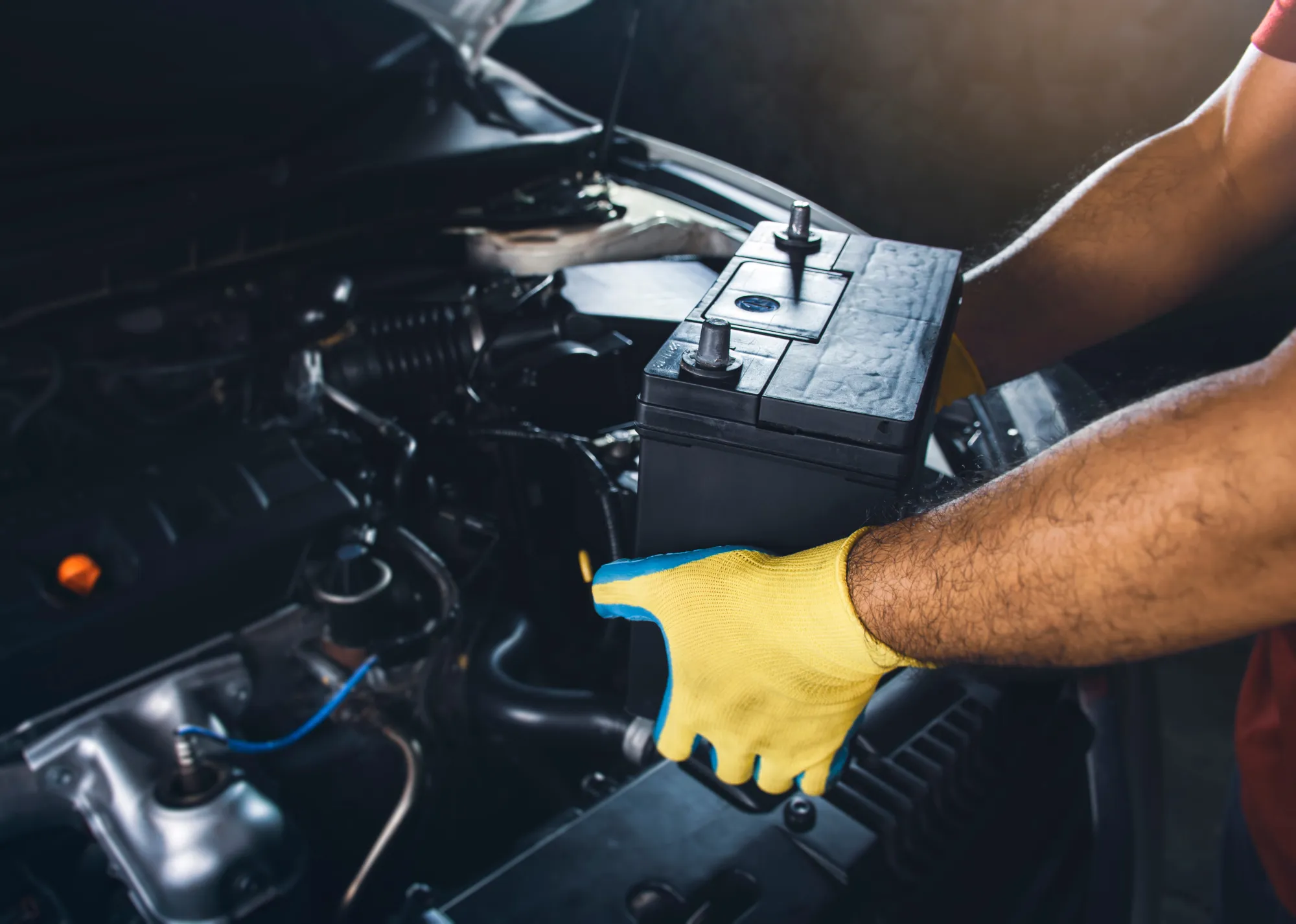
Yes, you can replace a battery cable without replacing the battery if the battery is still serviceable. For Demopolis drivers considering battery cable replacement, the decision should come from separate checks of the battery, the cable, and its connections.
A damaged cable does not automatically mean the battery has failed. Fixing a cable also will not restore a failed battery. Testing should establish which parts are faulty: the battery, a terminal connection, the cable itself, or more than one of them.
Test the battery separately
A battery assessment should distinguish low charge from poor battery condition. Interstate Batteries’ testing manual separates results such as “Good Battery,” “Good Recharge,” “Charge & Retest,” and “Replace Battery.” Its test procedure also accounts for battery type and rating. A charge-and-retest result means there is not enough charge to complete the diagnosis; it is not yet a replacement verdict. Interstate’s testing manual explains those distinctions.
That matters when deciding what to keep. If the battery tests serviceable after any required charging and retesting, cable damage alone is not a reason to discard it. If the battery independently fails the appropriate test, a cable repair will not resolve that finding.
Corrosion also needs interpretation. Subaru of America’s battery inspection bulletin distinguishes terminal corrosion and normal seepage from an actual case-cover seal defect requiring replacement. Visible buildup deserves inspection, but its presence alone does not settle the battery’s condition. Subaru’s inspection guidance illustrates the difference.
The wording on the test report is worth reading. “Good Recharge” supports keeping the battery while addressing its charge level. “Charge & Retest” leaves the decision open until the follow-up test. Ask for the actual result when a recommendation simply says “battery problem.”
Inspect the cable, terminals, and grounds
Inspection should look beyond the clamp on top of the battery. Loose connections, damaged conductors, and corrosion can create resistance. Both the positive cable path and the negative ground path deserve attention.
A clean exterior cannot rule out an electrical restriction. Fluke notes that damage inside a connection or wire can escape visual inspection. That is why the next step may involve testing the circuit while it works.
What battery cable voltage drop testing shows
A battery cable voltage drop test measures voltage lost across a cable or connection while current flows. For a starting complaint, that means testing under the applicable cranking or specified load conditions, rather than relying on an unloaded check.
The technician can compare the positive and ground paths with the vehicle’s service specifications, then narrow an excessive loss to a connection or cable section. Fluke explains that an unloaded resistance check may miss restrictions that show up during voltage-drop testing. Fluke’s automotive troubleshooting guide describes this approach.
If the complaint comes and goes, note when it happens. That information can help testing capture the fault, as explained in our guide to diagnosing an intermittent problem.
When is a terminal repair enough?
A terminal repair may be appropriate when damage is confined to the cable end, the remaining cable is sound, and a suitable repair exists for that vehicle. Cleaning and correctly securing an otherwise serviceable connection may also address a connection fault.
Cleaning is a repair choice only when the parts remain serviceable. Subaru’s guidance calls for cleaning the battery posts and the inside contact surfaces of the terminal ends, drying the components, and tightening fasteners to their specified torque. It also cautions against liquid cleaning of an equipped battery sensor. The procedure should come from the current service information for the vehicle, rather than treating every terminal arrangement alike.
When reviewing a proposed terminal repair, ask what was found at the connection: removable buildup, a loose attachment, or damage that requires a replacement part. Those findings explain why cleaning might be enough in one case and a new terminal might be appropriate in another.
Vehicle fit matters. Dorman offers a replacement positive terminal for certain Ford and Lincoln applications that retains the factory battery-fuse mounting without replacing the whole cable. The replacement needs to match the vehicle’s cable and fuse arrangement. Dorman’s terminal listing identifies the intended applications.
The Dorman example is useful because it shows what a compatible repair must account for. The terminal connects with the existing cable and accommodates the factory fuse. A replacement should be selected by application, rather than appearance alone. A part that looks similar is not enough information to approve the repair.
Ask which part the estimate calls a “terminal”: the removable cable end or the battery’s own post. Have the technician point out the damaged piece so the proposed repair is clear.
Before approving an end-only repair, ask whether the remaining cable was checked and whether the replacement preserves the original connections and required features.
When does the complete cable assembly make sense?
A complete assembly may be appropriate when conductors are damaged, corrosion extends into the cable, or a suitable terminal repair is unavailable. The extent of the fault and the vehicle’s repair procedure should guide that choice.
These examples show how the decisions stay separate:
- Serviceable battery, damaged cable: Replace the faulty cable and retain the battery.
- Serviceable battery and cable, isolated terminal damage: Consider a compatible terminal repair.
- Failed battery and damaged cable: Address both documented faults.
These are possible findings, not a diagnosis for every vehicle with corrosion or a starting complaint.
If a recommendation includes both a battery and a cable, ask for the finding that supports each item. A failed battery test explains the battery recommendation. Documented cable damage or an electrical test finding explains the cable recommendation. When the explanation covers only one part, ask how the other part was evaluated before deciding whether to replace both.
Confirm that the repair corrected the fault
After the connection or cable repair, repeat the relevant voltage-drop test and check starting operation. Resolve any pending battery charge-and-retest result before making the final battery decision.
A useful repair explanation should identify the battery’s test result, where the cable fault was found, why a terminal repair or full assembly was selected, and what the follow-up checks showed.